Saturday, August 18, 2012

Summer Romance: Shall I compare thee to a Summer's Day?


                      Image credit: field-of-sunflowers by geargodz / 123RF Stock Photo


Summer is winding to a close. Soon we'll all be sending kids off to school, planning fall football parties or plotting the fall craft show circuits. Soon the nights will get colder. The frost will come, and the flowers will go dormant. The leaves will fall. All the beauty surrounding us in this moment, the flowers, the warm, lazy days filled with sunshine will end.

My advice: Stop what you are doing today for a few brief moments. Just stop. Yes, today. Just take time to savor the wonders of the season before it is over. Have your own personal love affair--with Summer.

Image credit: fresh-raspberries by patrickrp / 123RF Stock Photo

We're all busy, too busy these days. Even vacations become hectic marathons. We have to get to the hotel by this time or lose the reservation.... we have to attend that wedding, family reunion, birthday party so we hurry through summer......hurry.....hurry......hurry.

Well, stop it, please? Give yourself a little time to embrace in the serene beauty of summertime.

White Admiral butterfly on Echineaca, by Lily Silver

Remember the scent of freshly cut hayfields. take time to listen to the sound of crickets chirping beneath the steps, songbirds singing before they migrate to other regions. Hear the wind rustling the trees. Cherish the sight of a butterfly flitting through the garden, alighting on flowers. Savor the taste of cool, tart lemonade, sweet hand picked berries and farm market produce. If you live near a beach, take one last trip to wade through the swirling waves and get wet, cool sand between your toes. Soak up the warm sunshine, and just breathe. That's right. Just breathe.  Relax, savor the last few days of August before the hectic return to school year schedules and obligations.


Image credit: young-girl-relaxing-on-beach by volare2004 / 123RF Stock Photo

 Shakespeare sums it up pretty well in Sonnet 18: Summer is fleeting. It's lovely, but it has an expiration date. So embrace Summer. Love it, cherish it. Store up memories of her sweetness until she returns again. Have a brief fling with the lovely Golden Goddess before she's gone. Whether you like the English Bard or not, take time to savor the wonder of summertime, quickly, today . . . before summer's lease expires . .


 "Shall I compare thee to a Summer's Day? 
Thou art more lovely and more temperate; 
Rough winds to shake the darling buds of May, 
And Summer's lease hath all too short a date:
Sometimes too hot the eye of heaven shines, 
And often in his gold complexion dimm'd; 
And every fair from fair sometime declines, 
By chance, or nature's changing course, untrimm'd:
But thy eternal summer shall not fade,  
Nor lose possession of that fair thou ow'st;
Nor shall Death Brag thou wander'st in his shade, 
When in eternal lines to time thou grow'st;
     So long as men can breathe, or eyes can see, 
     So long lives this, and this gives life to thee."
                 William Shakespeare


Image credit: duskbabe / 123RF Stock Photo

Sunflowers, waves and warm, liquid golden sunsets. Take a moment to enjoy the Romance of Summer. 

Oconto Harbor at Sunset, Lily Silver, 2011


Tuesday, August 14, 2012

Fairy Magic; Have you met any of the Good People?


        Image credit: magical landscape-with-waterfalls by ateliersommerland / 123RF Stock Photo


0My most recent book release, Some Enchanted Waltz, is a story that takes place in 18th century Ireland. As part of my research for the book, I delved into Irish folklore and found some wonderful tales about Fairy Magic, along with various beliefs about Irish fairies of the time period. Here is the premise for the book. As you can see, it's ripe with potential for a love story between Fey women and Mortal Men. 
      “At certain seasons of the year, Fairy Queens make Great Efforts to carry off the fine stalwart young men of the country to the fairy palace in the cleft of the hills. Or they attempt to lure them to their dancing grounds, where the men are lulled into dreams by the sweet, subtle fairy music and forget home, kith and kindred, and never desire to return again to their own people. Even if the spell is broken and they are brought back by some strong incantation, they are never the same; for everyone knows by the dream look in their eyes that they have danced with the fairies on the hill, and been loved by one of the beautiful race, who, when they take a fancy to a handsome mortal lover, cast their spells over him with restless power.”

The Book of Irish Cures, Mystic Charms & Superstitions
By Lady Wilde,  1896


In Some Enchanted Waltz, Lord Dillon rescues a woman from British soldiers. As an 18th century Irish lord, he is convinced Tara is a member of the Fey Race. Tara, a 21st century woman, scoffs at his assessment--but is he deluded--or has he recognized something in Tara that is very beautiful and unique? 
 In Irish folklore, there are stories of encounters with the Good People, The Other Folk or the Fairy Folk. I've read several accounts of people traveling along deserted roads at night and having met strange folk who took them to other realms, both in past centuries and even in the present one. Sometimes the mortals had trouble getting back to their realm, and had to do some very quick thinking to outwit their enchanted hosts. 

A very good book I recently found regarding encounters with the Fae Folk in Ireland is Meeting the Other Crowd; the fairy stories of hidden Ireland, [collected and edited by Edie Lenihan with Carolyn Eve Green]. In this book I read countless tales collected from interviews of people being contacted or abducted when walking home alone a road. 

Even today, in Ireland, it is bad luck to say anything derogatory about the Good People. In one such incident from Meeting the Other Crowd, two women were driving down a winding country road in their car one night, discussing the Fae. The driver scoffed at the idea, and within seconds of her derisive laughter, their car stalled, dead--nothing--nada. Now they were two women stranded alone on a dark, winding country road. After the woman profusely apologized to the other folk,  her car started again! This is recent account, from our century!  

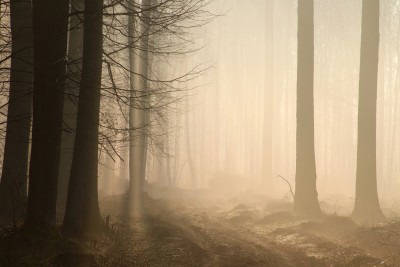
                      Image credit: trail-in-the-misty-forest-at-dawn by nature78 / 123RF Stock Photo

So, what ever you do, don't talk ill of the Good People. They'll hear you, and you'll be sorry. In my house, we respect the Fae. If something is missing and we cannot find it, we say the fairy folk have borrowed it, and we ask them politely to return it when they are finished with it. And usually within the day, the item is recovered. Think what you will, but I do believe in fairies!

Now it's your turn. Have any stories to share, or a tidbit of folklore? I'm dying to hear your stories.


Monday, August 6, 2012

Serial Writing, Anyone? A Gift of a Free Novel


When I was younger, I remember radio shows featuring "A Chapter a Day" events where one chapter of a book was read aloud for about 15 minutes of air time. I loved those old serialized books .

In honor of the good ol' days, when it wasn't all about the almighty buck and how many people liked you on Facebook, I have decided to make one of my own novels free on  my website. http://lilysilver.webs.com/     The entire Novel will be free, and there will be two to three new posts a week until the novel is finished. If you wish to follow along on this journey, then please click the link and add my website to your browser. I will post the newest post at the top of the page each time for your convenience.

About the Book: The Gypsy's Curse is a book I began writing in 2010. It is nearly completed, but not quite. That's the beauty of it. Having readers tune in every week for a new excerpt is a motivation for me to finish the book.  The story takes place in England during the Romantic Period of art and literature, about the same time as the Regency Period. It also takes place in the romantic Lake District area of England. Zara, a gypsy, has been cast out of her tribe as it is believed she bears the 'Devil's Mark'. She is half gypsy and half Gadje blood. She is taken in by a kind old widow and lives with her on her small farm. When the widow is murdered, Zara is the suspect, and she must flee for her life. She finds refuge in an old manor house that has been closed up for a few years. The owner is a widower racked by guilt over his wife's violent death. He is a werewolf, and believes he killed her. While Zara is hiding in the house, he decides to return to the place to confront his demons. At first he doesn't realize the woman appearing to him at night is a real person. He believes it's a ghost . . .

To get you started, here is the first excerpt of "The Gypsy's Curse" Copyright Lily Silver 2012   Prologue
The sheriff marched resolutely to the center of town, hammer in hand, and the decree tucked under his arm. He stopped at the billet post, dug into his coat pocket, and produced two thick nails. He slipped them into his mouth, the blunt ends in, sharp points hanging out, and pressed the decree against the wood board. The sound of his hammering echoed about the village square as he posted the warrant given him by the local magistrate.
Wanted for questioning regarding recent murder in Lexford Woods:  Young woman of gypsy blood described as short, slim, with dark hair and bright green eyes, of approximately a score in age. The gypsy is known to frequent these parts with a local caravan, but has recently been traveling alone. Distinguishing features include a scar on the left side of her face, above the eye, and a fresh wound to the hand. The woman is armed, and considered a prime suspect in the murder at the farm of  Widow Kendall and her visiting nephew, one Jasper Leeds of Hampsell Place.
        Once finished, he marched straight toward The Griffin’s Lair for a shot of whiskey. It might be an hour shy of noon, but he sorely needed a shot of courage after the grisly scene he’d been called to this morning at Widow Kendall’s farm. The bodies of the poor souls were still swimming before his eyes, the jagged wounds, the slashed flesh and the horrified open eyes.
        Worse for it, the stench of their gore stuck in his nostrils. Even with a sound washing with plenty of lye soap, he doubted he’d be able to escape that putrid smell of human innards split wide open like a gutted deer for weeks to come.
        Wanted for questioning!  Ha, that was a bunch of rancid tripe on the part of the magistrate. All that fancy talk of evidence, motive and guilt verses innocence was fine and good for a man like Magistrate Collins, who sat behind a desk all day and didn’t have to hunt down a vicious killer himself. When face to face with evil a man didn’t argue with the devil, he took action and saved the lives of those who depended upon him.
         If he caught the little whore she’d wish she’d never been born. Question her about what, for pity’s sake? Why she’d mutilated two God fearing souls in the middle of the night.  He shook his head. The world had worked just fine without these intelligent blokes always throwing a cog in the works and bringing everything to a dead halt with their grand talk of rights and habitual corpses! Oh, she’d hang for sure when they found the bitch. He’d hang her on sight and send a message to all her kind to stay away, for good.
 Chapter One
The Lake District, England, 1816
         The Devil’s Mark! That was their excuse. That was the reason she’d been thrust out into the world of the Gadje, coldly cast out of her tribe and exiled from the family she’d known and loved.
          Zara trudged on through the woods. She pulled the woolen shawl tight about her shoulders, and pushed on. Her progress was slow as she was walking into the wind. She was tired and hungry. She’d spent last night in a cave, without a fire, lest the townspeople see the flame and discover her hiding place. The cave had been damp and cold. She finished the last of the bread and cheese she’d taken from the Widow’s kitchen before setting out on her long trek to parts unknown.
         It was late autumn. Snow would soon be dusting the woods. The small streams and creek beds would freeze over. The rivers would remain a source of water throughout the winter, but most rivers were surrounded by towns and farmsteads. As a child of nature, she knew she must find shelter soon or she might die from exposure to the harsh winter nights. Lothar taught her how to track animals and trap game from the time she was able to walk. Her uncle had unwittingly given her the tools to survive without being dependent on another. Thank the fates for Lothar and his practical, pragmatic nature. He gave her knowledge to the woods and the creatures that inhabited it that most girls of her tribe would envy. He took her with him on his forays into the bush to trap dinner, when other girls were kept close to the fire to learn other skills from their mother’s knees. But winter’s harsh pall left even the best trappers in her tribe with empty pouches when they returned to camp. That was why the caravan traveled south for the winter months.
         A deer had come across her path at dawn, when she was filling her cask with water at the icy stream, but Zara had no weapon with which to bring down such a fortuitous bounty presented to her from the wood spirit. She had no gun and no bow and arrow. Just a knife, a large hunting knife Lothar had given her when she was ten years old. Even if she had such weapons, she didn’t think she would have been able to fell the gentle eyed doe. Like her, the animal was alone in a world full of hunters, alone and without hale companions or the protection of a great horned mate.
         She stopped for a moment to recover her breath and examine her hand. Her fingers were numb from the cold. The bandage was stiff, almost frozen to the scored flesh. At least the cold weather had offered her some assistance. The outer bandage was dried from the cold; there would be no fresh flowing blood to give the hunter’s hounds a trail to follow.
         As if in protest to her hard won peace of mind, deep baying echoed the distance behind her. Zara smashed her lips together and hurried up the steep hill, as uncertain of her destination as she was of her present bearings. She returned to the woods two nights past, after awakening in the farm house to find the widow and her reprehensible nephew dead beside her. She had no memory of what happened. She’d awakened on the floor of the parlor just before dawn, with Lothar’s knife in her dominate hand, and the painful gash splitting the palm of her other hand.
        Zara knew she’d be blamed for the murders, regardless of the mysterious circumstances, simply because of her origin. A gypsy, even a half blood gypsy was always blamed for any misfortune that fell on the people nearby. If a pig or goat went missing, a horse took ill or a barn burnt to the ground, it was always the gypsies, so the Gadje claimed.
       Some villages were better than others, more accepting of their visits. They were tolerated and allowed to trade with the town for a week or driven on without even being allowed to rest their horses by angry Gadje men with guns. Each time they set up camp in a new place, the men of her band made wagers amongst themselves as to how long it would be before the Gadje showed up with guns and pitchforks, demanding that they move on to the next town. It was her misfortune to be banished when her tribe was traveling through a hostile region instead of a more tolerant one.
       As she crested the rise of the steep hill, Zara leaned against a stark, majestic oak to recover. There was a sharp stitch in her side. The silver steam of her rapid breath wreathed about her in the cold air. She was so tired. Her chest ached and she feared she might be courting the dreaded lung sickness after spending two nights out in the cold, damp November woods with no fire and no shelter. She’d walked hard for days, trying to put as much distance between herself and the Kendall Farm as she could. She didn’t dare stop to rest until she found a shelter, as she feared if she stopped too long, she would not have the will to get back up and keep going. An abandoned barn or cottage would see her through until spring. By then, perhaps the locals would have forgotten she had resided with the Widow Kendall for a time and she would no longer be hunted like an animal by the people of the town. In the spring, when the snow melted, she’d head south and try to find a caravan traveling northern to take her in. It seemed a good plan, to her fevered mind, and she scanned the valley below for a possible refuge.
       The landscape below was very beautiful. In spring and summer, it would be a veritable paradise. It would be a wonderful place for the caravan to make camp, and perhaps stay for longer than a week or two. A picturesque lake was banked by tall willow trees. The lake skirted a fenced in pasture. A deep longing burgeoned forth unbidden. This would be a delightful place to live, in a small cottage near the lake, nestled between the two hills, a cozy place---Zara gasped. She covered her mouth and made the sign with her dominant hand to ward off the evil eye. She was alone, but still, it wasn’t good to let her Gadje blood rise to the fore. And settling in one place, setting down roots was foreign to her mother’s people, it was his father’s influence, his taint in her blood that made her yearn for such wanton things.
       She turned her mind back to the task before her, finding shelter before nightfall. There had to be a farm nearby or some estate, if there was grazing land below. She studied the beguiling landscape. Not one building. She squinted, and placed her hand over her eyes. Perhaps, just past that stand of trees on the opposite end of the valley . . .?
      The sun was lowering in the sky. It would be dark within hours.
The Gypsy's Curse: copyright Lily Silver 2012

To continue the story, click the link here to go to my website; lilysilver.webs.com/  and if the free reads page does not come up immediately click on that tab.
There are five posts up at present.


Monday, July 30, 2012

The Highwayman, Part II

Image credit: www.123rf.com/illustration-night-forest-with-bright-moon-in-clouds by artshock
Our Timeless Lovers this week are The Highwayman and Bess, the Landlord's Daughter.
They are featured in a Poem by Alfred Noyes, published in the early 20th century. The lovers, of course, are from the 18th century. Their love affair ends tragically, like Romeo and Juliet, and yet, it also has a positive note, unlike Romeo and Juliet, as they are reunited in the after-life.
The Highwayman still comes to visit Bess at the Inn after their demise.
Ah, now we have romantic ghosts!  Love it. You will, too. With the coming full moon this week, enjoy this poem and imagine a bit of ghostly courtship taking place on a lonely, moonlit road, as gentleman caller rides up to the old abandoned inn door and pays a visit to the lovely, pale Bess, the Landlord's Black eyed daughter . . .

Part one of this excerpt was in the previous post, and the following lines are from Part II of the famous poem.

When we left the lovely Bess on Friday, she was having a bad night as the soldiers came to the inn and seem to be settling in.  She's worried, for you see, her lover, the highwayman, promised to come to her that night. 
 
The Highwayman, Part II by Alfred Noyes:

He [the highwayman] did not come in the dawning; he did not come at noon;
And out o' the tawny sunset, before the rise o' the moon,
When the road was a gypsy's ribbon, looping the purple moor,
A red-coat troop came marching—Marching—marching—
King George's men came marching, up to the old inn-door.

They said no word to the landlord, they drank his ale instead,
But they gagged his daughter and bound her to the foot of her narrow bed;
Two of them knelt at her casement, with muskets at their side!
There was death at every window; And hell at one dark window;
For Bess could see, through her casement, the road that he would ride.

They had tied her up to attention, with many a sniggering jest;
They had bound a musket beside her, with the barrel beneath her breast!
"Now, keep good watch!" and they kissed her.
She heard the dead man say— 
"Look for me by moonlight;
Watch for me by moonlight; 
I'll come to thee by moonlight, though Hell should bar the way!"

She twisted her hands behind her; but all the knots held good!
She writhed her hands till her fingers were wet with sweat or blood!
They stretched and strained in the darkness, and the hours crawled by like years,
Till, now, on the stroke of midnight,
Cold, on the stroke of midnight,
The tip of one finger touched it! The trigger at least was hers!

The tip of one finger touched it; she strove no more for the rest!
Up, she stood up to attention, with the barrel beneath her breast,
She would not risk their hearing; she would not strive again;
For the road lay bare in the moonlight;
Blank and bare in the moonlight;
And the blood of her veins in the moonlight throbbed to her love's refrain.

Tlot-tlot; tlot-tlot! Had they heard it? The horse-hoofs ringing clear;
Tlot-tlot, tlot-tlot, in the distance? Were they deaf that they did not hear?
Down the ribbon of moonlight, over the brow of the hill,
The highwayman came riding, Riding, riding!
The red-coats looked to their priming!
She stood up, straight and still!

Tlot-tlot, in the frosty silence! Tlot-tlot, in the echoing night!
Nearer he came and nearer! Her face was like a light!
Her eyes grew wide for a moment; she drew one last deep breath,
Then her finger moved in the moonlight,
Her musket shattered the moonlight,
Shattered her breast in the moonlight and warned him— with her death.

He turned; he spurred to the West; he did not know who stood
Bowed, with her head o'er the musket, drenched with her own red blood!
Not till the dawn he heard it, his face grew grey to hear
How Bess, the landlord's daughter,
The landlord's black-eyed daughter,
Had watched for her love in the moonlight, and died in the darkness there.

Back, he spurred like a madman, shrieking a curse to the sky,
With the white road smoking behind him and his rapier brandished high!
Blood-red were his spurs i' the golden noon; wine-red was his velvet coat,
When they shot him down on the highway,
Down like a dog on the highway,
And he lay in his blood on the highway, with the bunch of lace at his throat.

And still of a winter's night, they say, when the wind is in the trees,
When the moon is a ghostly galleon tossed upon cloudy seas,
When the road is a ribbon of moonlight over the purple moor,
A highwayman comes riding—Riding—riding— 
A highwayman comes riding, up to the old inn-door.

Over the cobbles he clatters and clangs in the dark inn-yard;
He taps with his whip on the shutters, but all is locked and barred;
He whistles a tune to the window, and who should be waiting there
But the landlord's black-eyed daughter,
Bess, the landlord's daughter, 
Plaiting a dark red love-knot into her long black hair

Again, if you are looking for a musical rendition of the this lovely poem, check out Lorena McKennitt's  version from her Book of Secrets CD. The link is here again for your convenience:
Lorena McKennitt's rendition of "The Highwayman"

For Romance Novels featuring a highwayman, here is a brief listing:

A Perfect Hero by Samantha James 2005 ---I enjoyed this story so much I can still remember it years later. The hero is a masked highwayman who kidnaps the heroine from a carriage and keeps her in his isolated cottage in the woods as his prisoner.

The Highwayman (Wicked Games Series) by Michele Hauf, 2010.---here is a paranormal twist on the old legend, as the highwayman is cursed to roam the highways forever hunting demons. The novel takes place in modern times. My personal favorite. 

Other titles you might like: 
Lord Midnight by Donna Cummings  2012
Secrets of the Highwayman, by Sarah  McKenzie 2012
The Highwayman's Daughter by Anne Avery, 2012
The Highwayman's Mistress by Francine Howarth 2011
The Raven's Revenge by Gina Black, 2010


If you enjoy movies, there is a great Movie called Plunkett and McCleane from 1999. It takes place in 18th century England, and while not the pure Highwayman story of the poem, it has similar themes, with the robbers Plunkett and McCleane as masked highwaymen holding up the rich in their carriages and there is a love interest of  Liv Tyler for McCleane. Well done if you like period dramas. I've enjoyed this older movie again and again, but then I enjoy most movies that take place in the 18th century. This one had it all, romance, intrigue, adventure and humor!
Movie Trailer on YouTube

Now then, if you're looking for more masked men fighting injustice, well, there is Batman, Zorro, among others, and of course the usual modern day marvel comic heroes ranging from the Green Lantern to Spider Man. Somehow, they just don't hold a candle to the romantic old 18th Century image of the masked highwayman on the horse confronting a carriage on a dark road.


Friday, July 27, 2012

The Highwayman Came Riding . . . Riding . . .

 
Image credit: Highwayman by Heywoody purchased at 123RF Stock Photo
If you've never read the narrative poem "The Highwayman" by Alfred Noyes, published in 1906, you've missed a truly romantic story.  The Highwayman and Bess, the Innkeeper's daughter, have a thing going. They meet late at night. He stops by on horseback, knocks on her window, and she leans out. They talk, they kiss, and her lovely long dark hair caresses his face. But, with any story, there is conflict. The Highwayman is a wanted man, because he is in reality a thief. Soldiers come, they set up camp at the Inn, they use Bess as bait to lure him to the trap, she kills herself, using the gun shot and the flash of the powder to warn him and he escapes. The next morning he hears the news, how the lovely Bess killed herself to save her love from the soldiers waiting for him at her home. He's so full of grief at the loss of his love, what does he do? Why, he heads back towards the soldiers and has it out with them, going down in a bloody fight to avenge his true love's death.

The beauty of this romantic story,aside from the Romeo and Juliet storyline, is that it doesn't end there.
The ghost of the highwayman comes riding down the lane, stops and the inn, and knocks on the window. And who's to say a Ghostly Bess doesn't answer his romantic knock?

The poem is in the Public Domain, as it was published before 1923.
So, dear reader, savor it for yourself. The original poem is far better than any retelling;

The Highwayman, by Alfred Noyes: Part I  (Part Two will be in the next Post)

The wind was a torrent of darkness among the gusty trees,
The moon was a ghostly galleon tossed upon cloudy seas,
The road was a ribbon of moonlight over the purple moor,
And the highwayman came riding—
Riding—riding—
The highwayman came riding, up to the old inn-door.


 He'd a French cocked-hat on his forehead, a bunch of lace at his chin,
A coat of the claret velvet, and breeches of brown doe-skin;
They fitted with never a wrinkle: his boots were up to the thigh!
And he rode with a jewelled twinkle,
His pistol butts a-twinkle,
His rapier hilt a-twinkle, under the jewelled sky.


 Over the cobbles he clattered and clashed in the dark inn-yard,    
And he tapped with his whip on the shutters, but all was locked and barred;
He whistled a tune to the window, and who should be waiting there
But the landlord's black-eyed daughter,
Bess, the landlord's daughter,
Plaiting a dark red love-knot into her long black hair.


And dark in the dark old inn-yard a stable-wicket creaked
Where Tim the ostler listened; his face was white and peaked;
His eyes were hollows of madness, his hair like mouldy hay,
But he loved the landlord's daughter,
The landlord's red-lipped daughter,
Dumb as a dog he listened, and he heard the robber say—

 "One kiss, my bonny sweetheart, I'm after a prize to-night,
But I shall be back with the yellow gold before the morning light;
Yet, if they press me sharply, and harry me through the day,
Then look for me by moonlight,
Watch for me by moonlight,
I'll come to thee by moonlight, though Hell should bar the way."

 He rose upright in the stirrups; he scarce could reach her hand,
But she loosened her hair i' the casement! His face burnt like a brand
As the black cascade of perfume came tumbling over his breast;
And he kissed its waves in the moonlight,
(Oh, sweet, black waves in the moonlight!)
Then he tugged at his rein in the moonlight, and galloped away to the West.

 He did not come in the dawning; he did not come at noon;
And out o' the tawny sunset, before the rise o' the moon,
When the road was a gypsy's ribbon, looping the purple moor,
A red-coat troop came marching—Marching—marching—
King George's men came marching, up to the old inn-door.


In Part two, to be featured in the next Post, Bess is confronted with a horrifying reality as the soldiers lay a trap for her lover as she remembers her love saying at their last parting:

"Watch for me by moonlight; 
I'll come to thee by moonlight, though Hell should bar the way!"

Ah, lovely, tragic and romantic.  When I first heard this beautiful poem, it was being quoted in a movie; Anne of Green Gables. Anne, as a young woman, was at a literary event in someone's parlor, and with her usual dramatic flair, quoted the entire poem with verve and panche. Being a romantic, I was instantly intrigued. On a trip to the library, I found a lovely children's book that illustrated the poem verse by verse, with Bess, the Landlord's daughter and her long dark hair, the highwayman dressed as a romantic hero, and of course the redcoats and the tragedy that follows.

In the years since my first introduction to the highwayman, romance novelists have used this iconic image time and again, painting him to be the romantic hero, the valiant, wronged man fighting for personal vengeance, for the greater good, for true love, for king and country, you name it, the highwayman in romantic fiction novels has done it all. In my own recently published work, Some Enchanted Waltz
I have featured a masked highwayman of sorts who is fighting for his country as a member of the United Irishman, circa 1798, and who gallantly rescues a woman from British soldiers.

The idea of a masked highwayman of another age is appealing for many reasons, the masked man slipping about in the night, dressed in black. A dangerous man, a man outside the law, a man able to sweep a woman away in the darkness, either kidnapping her or rescuing her, depending on your fantasies.

A beautiful musical rendition of The Highwayman is by Lorena McKennitt, on her  Book of Secrets CD. It is truly haunting when sung by McKennitt accompanied by music.
Enjoy it on YouTube


Authors Note: All photographs you find on this blog site (excluding movie screen shots) have been purchased as royalty free images by the following stock agencies:  Dreamstime, istockphoto, 123rf or they are the intellectual property of the author, Lily Silver, who is also a professional photographer.

Wednesday, July 18, 2012

A Revolutionary Heart; One Woman's Courage

Mary Wollstonecraft, an early advocate for women's rights


It's July, and with celebrations of revolutions taking place in two different countries this month, Independence Day in America and Bastille Day in France, my mind has been on revolutionary heroes.

In my quest for timeless lovers, I sometimes find romance in the most unusual places. While researching for a historical fiction novel I am writing about Mary Wollstonecraft, I stumbled on some extraordinary romance tidbits worthy of a blog post.  For those who have never heard of Mary Wollstonecraft, or have erroneously assumed she was the author of Frankenstein (Mary Wollstonecraft Shelley was her daughter!) let me introduce you to our Romantic heroine for this week's blog. Mary Wollstonecraft was an English woman born in 1759 to a merchant family of impoverished means. She was the second child of Edward John and Elizabeth (Dixon) Wollstonecraft, and a bit of a rebel from the start. Her home life was miserable. Her father beat her mother and was a perpetual drunk who moved them often to avoid creditors. As the oldest girl, Mary was expected to help watch the children in the home. Her elder brother, Ned, was the family favorite, and given all the opportunity and education. Mary resented this, as she had a voracious mind and wanted to pursue and education like her brother.


Rustic Courtship

In Mary's time, it was expected that a young girl would attract a husband and become settled into married life. Mary defied her family and struck out on her own at seventeen, becoming first a lady's companion and then a schoolteacher to support herself rather than marry simply for a meal ticket. At this time in history, it was unheard of for a woman to become independent and support herself by working rather than simply marry a shopkeeper or farmer as a means of being provided for.  Women became governesses, teachers or ladies companions out of desperation, because they had no other prospects. Yet Mary would rather be independent and poor than married to a man she could not love.

Mary had suitors here and there, and turned down a few marriage proposals, which seems counter-intuitive considering her circumstances. She lived virtually hand to mouth in her independence by teaching children at a village school she set up in Newington Green. When the school failed to provide the steady income needed, she became a governess to a wealthy family in Ireland. She also supported herself by writing a few novels, and then writing a very shocking and emotional book that propelled her into the public forefront almost overnight due to it's scandalous presumption.  

A Vindication for the Rights of Woman, written and published in 1792, was a bestseller, and polarized the readers. They either loved it or hated it, but people were talking about 'that book' and 'that woman'! Most of the women loved it, and most of the men hated it--for obvious reasons as it raised the consciousness of a nation about the treatment and legal status of women in a time when political upheaval and revolution were occurring in many places in the world.

The most intriguing part of all this is Mary's private life as an 18th century woman. Mary Wollstonecraft defied convention time and again, but not marrying as her family hoped at an early age, by writing a series of arguments for rights for women at a time when they were merely the dependents of men in the legal system, much as children are to parents legally today. Mary was a trailblazer. She fell in love with a married man, Henry Fuesli, the painter of the famous spooky painting, "The Nightmare".


 They shared an intellectual relationship. Perhaps a clandestine one as lovers, although it has never been proven that they were lovers in the physical sense. Nevertheless, when Mary learned Feusli was traveling to France in 1792 to observe the events of the French Revolution, she followed him there.

Liberty Leading the People by Eugene Delacroix
  To our modern sensibilities it may seem relatively easy to follow a lover to France, but consider the situation. Mary is a single woman in the eighteenth century,  a woman of limited financial means. She is traveling alone, by ship, to a country that has being torn apart by a bloody revolution. While she is in France, some of her English intellectual friends were imprisoned there, including Thomas Paine, who wrote The Rights of Man. Paine was supposed to be executed in France, but through a twist of fate, he escaped the guillotine. The practice was when someone was condemned to be executed the next day, they placed an X on the outside of the prisoner's wood door. Somehow, the X was erased before morning and so Paine lived and went on to be hated and reviled in two countries for his revolutionary writings arguing for reason over religious fanaticism.


In France, Mary met Gilbert Imlay, an American businessman. They fell in love, and when things became too dangerous in the city of Paris they fled to the country and lived in a nice little cottage in the French countryside. Mary gave birth to Imlay's child, Fanny, at the cottage. Fanny was born out of wedlock. Again, Mary was still living her own way by thumbing her nose at convention and following her heart.

But, that heart would soon be broken.

Gilbert Imlay became disillusioned with their romantic dream, eventually abandoning Mary and his infant child during the worst years of the terror. Mary had hoped all along that he would marry her, and there is evidence he had promised to do so. Instead he left her with an infant to care for in a foreign land torn apart by civil war.  Mary was helped by friends and family to return to England, but she was despondent over Imlay's betrayal and even tried to commit suicide by jumping into the River Thames. As an author, she was later vilified for her scandalous behavior in living with a man out of marriage and having his child. This resulted in public opinion swinging against her and holding her up as an anathema, an example of what would happen if women were given equal rights and the freedom to make their own way in life. This stigma would last for nearly a century, pushing her seminal work on women's rights into obscurity until modern feminine voices unearthed it again.

Mary did have a her much deserved Happily Ever After: another intellectual friend and fellow writer, William Godwin, was much taken with her. He wooed Mary, and they eventually married. He also adopted her daughter, Fanny, as his own. They had a happy, but short life together, as Mary died some years later from complications of childbirth as she brought William's child into the world: Mary Wollstonecraft Godwin, who would grow up to marry Percy Shelley and write the famous novel, Frankenstein.

Cheers to a brave woman who deserves a place of honor among famous revolutionaries.

Tuesday, July 3, 2012

An American President as an Alpha Romance Hero?

                                               Image credit: Goodwin--123RF Stock Photo

Happy 4th of July.

As I'm feeling very patriotic today, I thought I'd share a love story of a different time. A true story, a little known story from American History. 

We often think of our nation's leaders as being made of stone, literally. We have the Mount Rushmore faces peeking out at us through time, the Lincoln memorial, and well, you get my drift. Our past presidents are all stoic leaders, pure and simple. They seem boring in their starched cravats and their white hair, posing for a historical portrait that makes them look, well....old and stuffy.

A former president.......as a romantic hero?  You're shaking your head, I can see it.
Well, let me introduce you, dear reader, to a fierce, lion of a man. A man who was so stern and tough, his nickname was Old Hickory.

Getting warmer ......now ......who knows which president was known by that name?

Andrew Jackson, yes, that's right. Jackson was a warrior before he took office, and a tough one

Jackson entered the War for Independence as a boy of fourteen, when the British invaded South Carolina. His elder brother enlisted a year before, in 1780, and was killed at the battle of Stono Ferry. Andrew and his brother Robert joined the militia in 1781, becoming guerilla fighters resisting the British who had been sent to quell the rebellion in South Carolina.  By the time the war was over, Jackson was already a scarred (due to small pox) and seasoned war veteran at the age of sixteen.

Add to that, his exploits with Jean Lafayette in defending the city of New Orleans when the British attempted to take the city during the War of 1812, and you realize Andrew Jackson was not a man to back down in a fight.

Andrew Jackson as a brave and gallant young officer.

He was a strong supporter of dueling, even though the practice was illegal. It was part of being a southern gentleman, a culture of honor. Every man of the time was expected to demonstrate their willingness to face death on the dueling grounds, to defend their reputations and to physically exhibit masculine courage. Jackson was involved in many duels as a young man and was known as a man who would not be intimidated. It would serve him well as there would soon be a young woman who would need a man of fierce reputation to aid her cause. 
 
Andrew Jackson became a lawyer after the Revolutionary War and moved to Nashville to practice law. He took a room at the home of an older woman named Mrs. John Donalson. He also met Mrs. Donalson's daughter, Rachel, who at that time was living in the Donalson home with her husband, Lewis Robards. The young couple was already very unhappy. Robards was reputed to be drunk and a violent sort of man. He intimidated those about him. At some point, he was asked to leave the Donalson home, while his wife, Rachel, remained with her mother. The surly man left town and moved to Kentucky.  This news was met with great relief by the Donalson household.

Rachel Donalson Jackson
 Andrew Jackson was quite taken with young Rachel. They were merely friends, not lovers. When news reached Nashville that Mr. Robards was planning to return from Kentucky and collect his wife, panic ensued. Rachel did not wish to be reunited with her violent spouse. So, mother & daughter hit upon a plan that would require the aid of a brave and gallant man. Jackson, along with another male friend of the family packed Rachel up and fled Nashville with her. They journeyed to Natchez and stayed there in hiding for months. News was sent to them after a time informing Rachel that Mr. Robards had filed for divorce. Believing herself to be free of Robards, Rachel married Andrew Jackson in Natchez and the couple returned to Nashville.

Once home again, they soon were greeted with terrible news. Robards had indeed filed for divorce but the divorce was not finalized, so it appeared that Rachel committed bigamy by marrying Andrew Jackson while still married to Robards. The scoundrel had also stated in his suit that his reason for divorcing Rachel was due to his wife deserting him to be with her lover, Jackson, when in truth, Mr. Robards had left Rachel some months earlier to live in Kentucky. It was embarassing, but soon the courts finalized the divorce and the Jacksons were able to move on as a happily married couple.

Unfortunately, this mix up would haunt President and Mrs. Jackson for the rest of their lives. Jackson's opponents would revisit the scandal time and again and use it to cast aspersions on his name in the political arena. Jackson did not deliberately commit bigamy, it was mix up in court papers being delayed and the couple being misinformed about the divorce being finalized when they did wed. Rachel Jackson was a very devout woman. She despised political life and remained on the Jackson farm in Nashville while Jackson served in public office. She smoked a pipe and enjoyed her life away from the demanding social arena of Washington. Jackson journeyed to visit her often while in office, and missed her terribly.

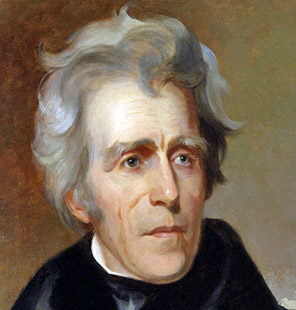
This is how you probably remember Andrew Jackson, in later years
We often remember the founding fathers as being old men with white wigs. We see them in paintings in middle age or later, posing and posturing for the artist to appear stoic, diffident and logical. And yet, each of these men were young and full of passion and determination when they began their journey toward greatness. They fought wars, they kissed pretty girls, they defended their honor in duels and in Jackson's case, rescued a woman who was desperate to escape her violent spouse.

Andrew Jackson may be remembered in negative terms due to his stern rule as a President of the United States from 1829-1837. In truth, some of his actions, particularly for his treatment of the Native Americans, is nothing to admire. However, he is also known as the Hero of New Orleans due to his staunch defense of that city during invasion by the British. And I hope you will also remember him as a worthy romantic hero who not only fought for our nation's freedom but also for the freedom of a woman at a time when women's legal rights were non-existent.

Happy Independence Day, and a salute to our gallant heroes in every era!